
Sheetfetch Blog
Sync data from APIs, databases, apps, or files into Google Sheets and keep it automatically updated. Sheetfetch is a simple no code connector that helps you automate data workflows and save time.

Working with data should be simple. But if you’ve ever tried to connect Google Sheets with your app, you know the reality is very different. Manual exports. Copy paste. Writing custom scripts. Fixing broken integrations every time something changes.

Want to pull data from YouTube into Google Sheets for analysis, content ideas, or building your own product? But don’t want to deal with coding or complicated setup? With Sheetfetch, you can do everything in just a few clicks.

In today’s fast-moving product landscape, speed is everything. Founders, marketers, and developers are constantly looking for ways to build faster without dealing with complex backend infrastructure.
Google Sheets has evolved far beyond a simple spreadsheet tool. Today it is widely used as a lightweight database, a reporting dashboard, and even the backend for many no code applications.

Google Sheets is increasingly used as a lightweight database for websites, SaaS MVPs, automation workflows, and internal dashboards. However, for applications or backend systems to use spreadsheet data, you need a way to connect Google Sheets with REST APIs.
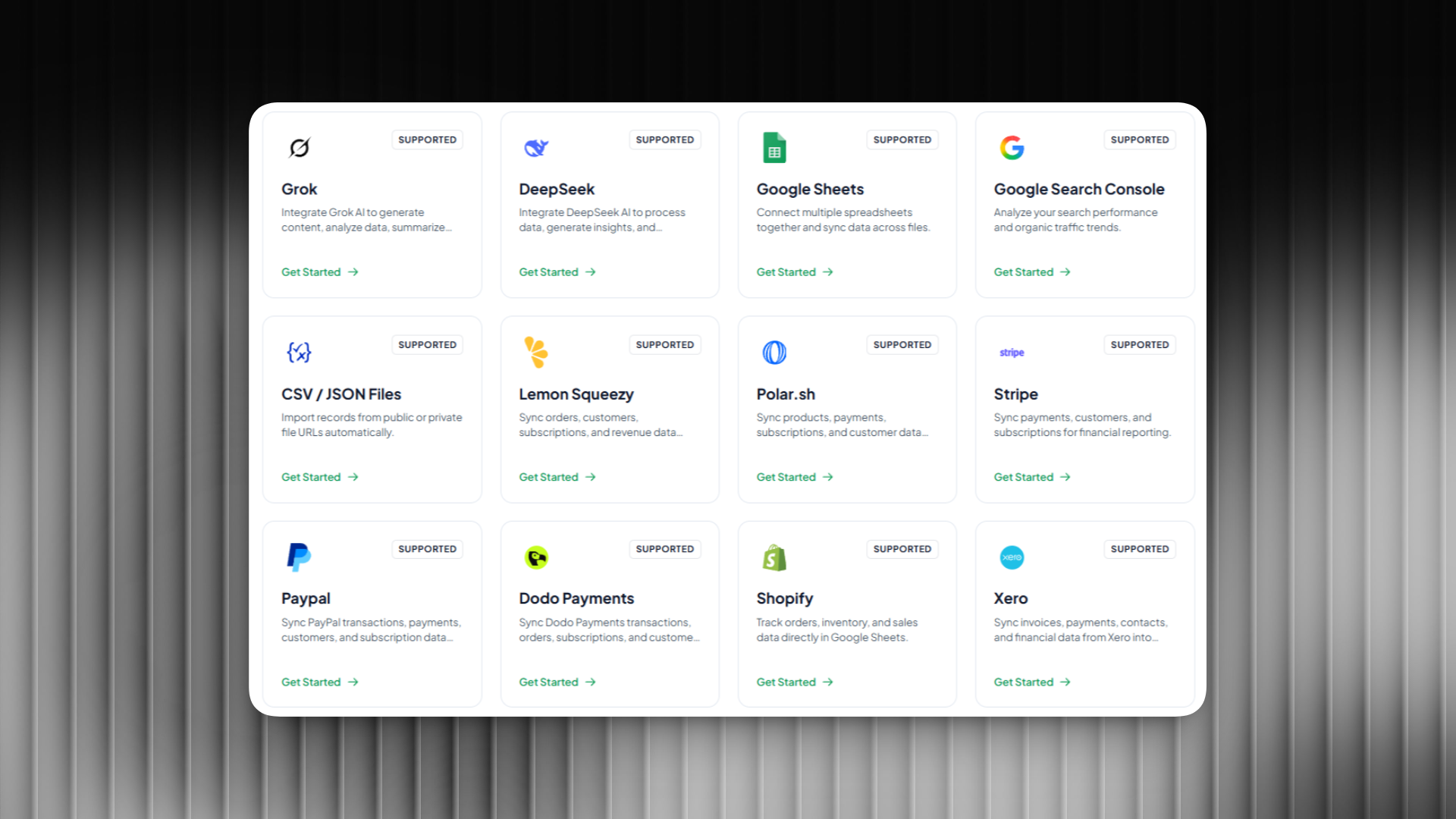
When working with data, connecting different tools to Google Sheets can save a huge amount of time. Instead of exporting files, copying data manually, or building complex API scripts, you can automatically sync data directly into your spreadsheets.
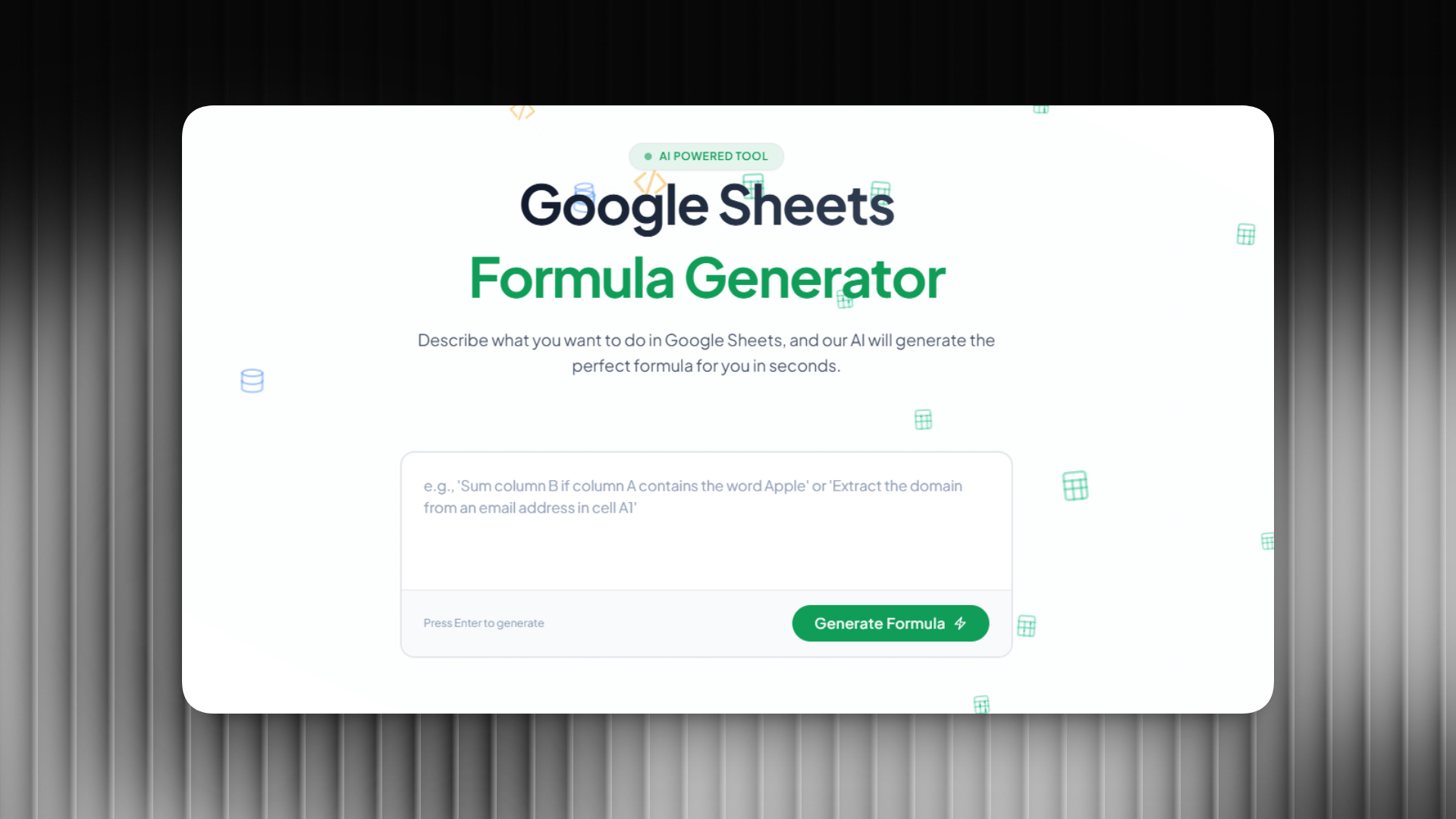
Writing formulas in Google Sheets can sometimes be frustrating, especially when dealing with complex functions like QUERY, ARRAYFORMULA, VLOOKUP, or multiple nested conditions. Many users spend a lot of time searching online just to find the correct formula.
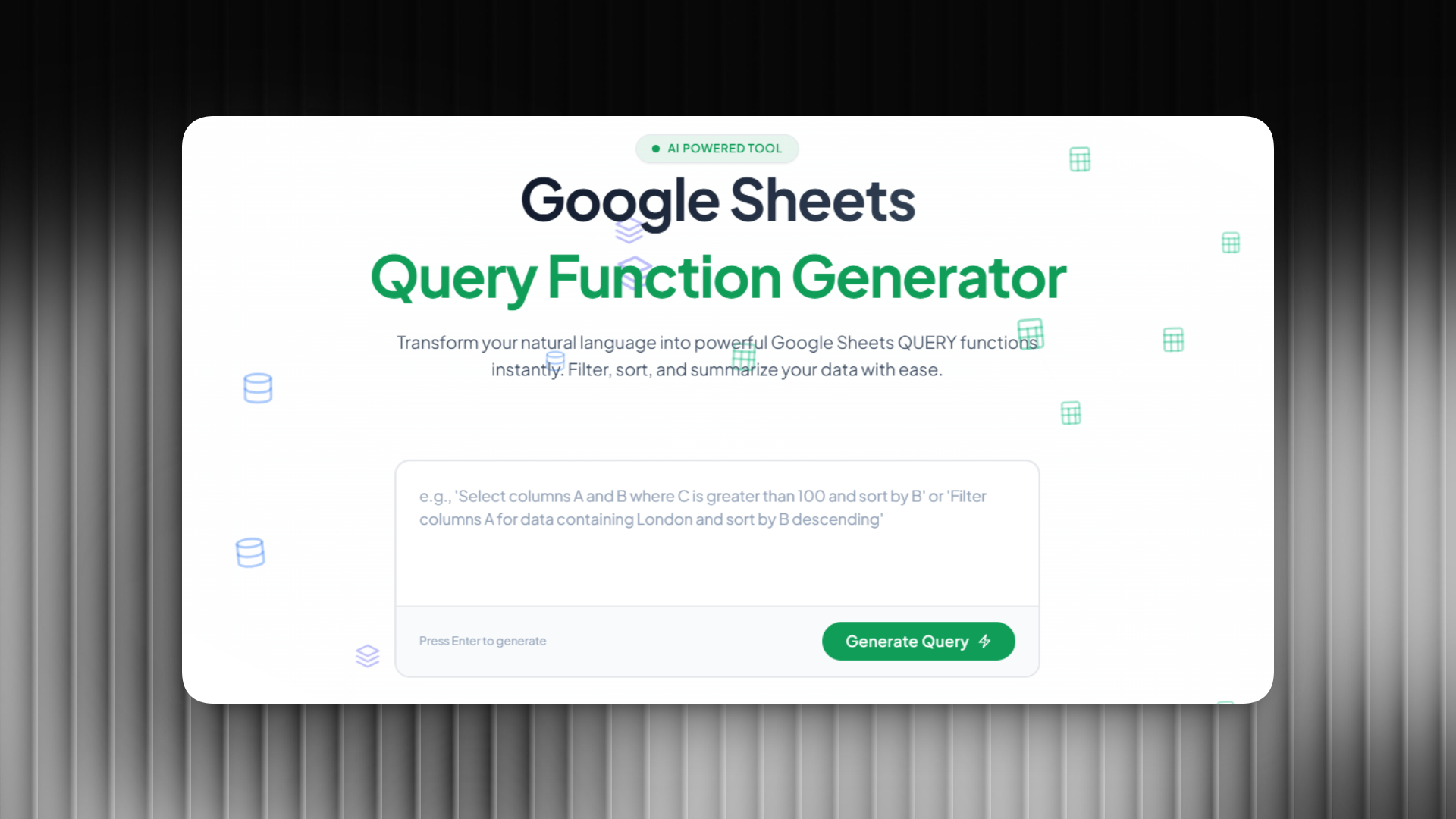
Working with large datasets in Google Sheets often requires powerful filtering, sorting, and data analysis. One of the most powerful features available is the QUERY function, but writing QUERY formulas manually can be difficult because they use SQL like syntax.
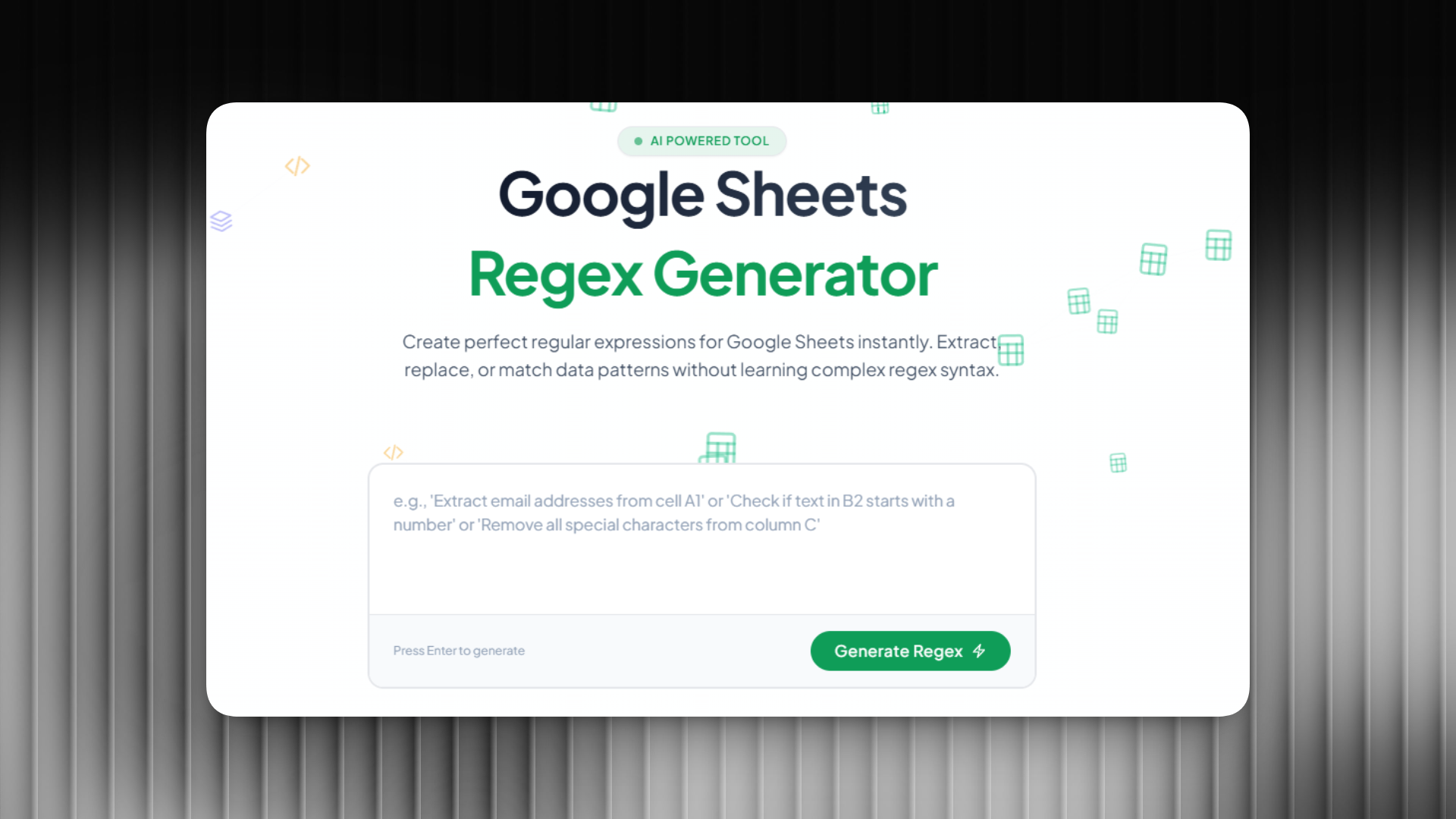
Working with text data in Google Sheets often requires advanced pattern matching, text extraction, or data cleaning. This is where regular expressions (regex) become extremely useful. However, writing regex patterns manually can be difficult, especially for beginners.

If you use Google Sheets to manage data, analyze metrics, or build workflows, you’ve probably faced the same problem many times: getting data from different sources into one place.
Receive a daily digest of the newest startups.